Shin conditioning is bone remodeling. It happens gradually over months as your shins adapt to repeated impact, not something you force in your first few weeks by kicking a hard bag as hard as you can. Rush it and you do not get tougher shins faster. You get bruising, inflammation, and time off training.
This is written for the adult hobbyist training two to three times a week around a job, not the competitive fighter who conditions daily and has a coach managing the load. If that is you, most of what is out there is not written for you.
Why most advice on this topic does not fit you
Search this topic and you get two kinds of content. The first is pro-fighter bravado: condition through the pain, toughness is the point, shin bruises are a badge of honour. That advice comes from people training twice a day with a team managing their recovery. Applied to someone training three times a week around a nine-to-five, it is a fast route to an overuse injury.
The second kind is generic sports-injury content that mentions "shin splints" without knowing what actually causes shin pain in Muay Thai, which is a completely different mechanism to running-related shin splints. Neither is useful if you are trying to build real conditioning while still showing up to work on Monday.
At Khao Noi Gym in Singapore, most of our adult members train this way. Steady, a few times a week, building conditioning over months. That pace is not slow. It is the pace that actually works.
What is actually happening when you condition your shins
Every time your shin makes contact with a pad, bag, or an opponent, the bone experiences a small amount of stress. Given time to recover, the bone responds by laying down more density along the front edge of the tibia, the part that takes contact in a kick. Over months of consistent, moderate exposure, that area gets measurably tougher.
The keyword is recovery. Bone remodeling needs rest between sessions to actually happen. If you kick hard every single day without a break, you are stacking stress on stress before the adaptation has a chance to complete. That is where the two most common adult injuries in this sport come from.
What are the most common overuse injuries from shin conditioning
- Shin bruising and periostitis. Periostitis is inflammation of the periosteum, the thin lining around the bone. It shows up as a persistent ache along the shin that does not go away between sessions, sometimes with visible swelling. This is the single most common overuse issue for adults who ramp up kicking volume too fast.
- Foot and metatarsal strain. High kicking volume, especially on a hard bag, puts real load through the bones of the foot. Adults who suddenly increase how many kicks they throw per week, without building up to it, often feel this as a dull ache across the top of the foot.
- Hip flexor tightness. Every kick is a hip flexor contraction. Do enough reps without any mobility work and the hip flexors tighten up, which then affects your stance, your lower back, and eventually your kicking technique itself.
How do you condition your shins the right way
Build up through stages, not intensity.
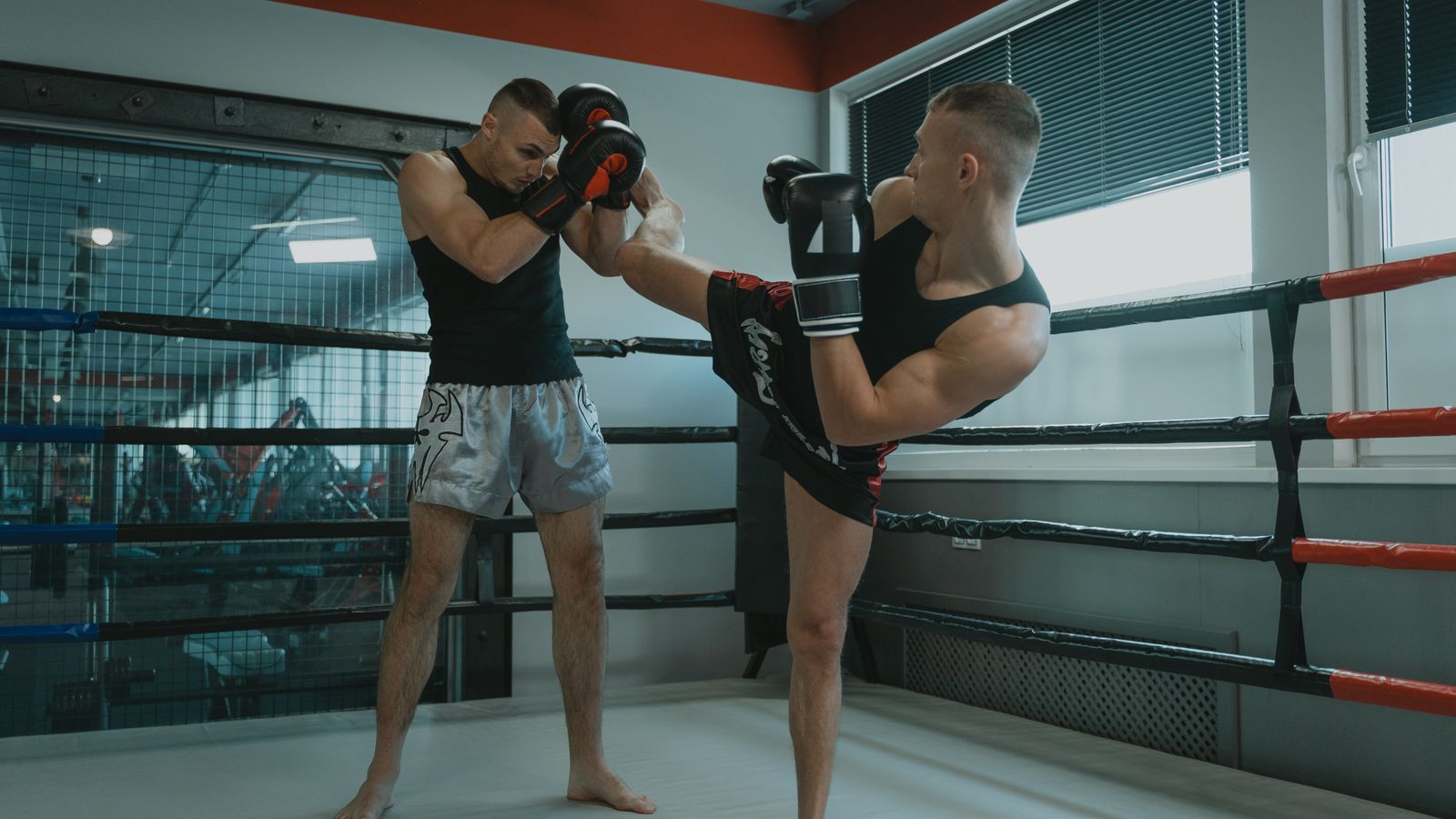
- Start on pads and soft targets. Kicking a coach's pads or a soft bag lets you groove technique and build initial tolerance without the repeated hard impact of a heavy bag. Most new members at Khao Noi Gym spend their first weeks almost entirely on pads for this reason.
- Increase kicking volume gradually. Add a small amount more each week rather than doubling your rounds because you feel good one session. Feeling good on day one of a big jump in volume is not a reliable signal. The damage from overuse often shows up 24 to 48 hours later.
- Wear shin guards for early hard drilling and sparring. Shin guards are not a sign that you are not tough enough. They let you spar and drill at a realistic pace while your shins are still adapting, which means more useful training volume with less risk of a setback.
- Progress to the heavy bag once pad work feels genuinely comfortable, not just tolerable. Comfortable means you can go a full round without thinking about your shins. Tolerable means you are gritting your teeth through it. Those are different things and only one of them means you are ready.
How do you tell normal soreness from an injury
This is the question that matters most and the one bravado-style advice gets wrong by telling you to ignore it.
- Normal training ache: a dull, generalised soreness across the shin that is present after a heavy session and noticeably better within a day or two. It does not get worse session to session.
- Warning sign: a sharp, localised point of pain you can press on and identify precisely. Pain that is worse at the start of a session than it was at the end of the last one. Visible swelling or a spot that is warm to the touch.
What recovery actually looks like for someone with a day job
You do not need a sports science degree or hours of spare time. A few things, done consistently, cover most of it.
- Hip and ankle mobility work. Ten minutes of hip flexor stretches and ankle circles after training keeps the tightness from repeated kicking from compounding into a bigger problem.
- Contrast therapy for sore shins. Alternating heat and cold, or just a cold pack after a heavy kicking session, helps manage the inflammation that comes with shin conditioning. Nothing complicated, just consistent.
- Sleep before supplements. Bone and soft tissue recovery happens during sleep. If you are training three times a week and sleeping five hours a night, the training is the least of your problems.
- Do not stack your hardest sessions back to back. If you know Tuesday is a heavy bag and sparring day, do not also make Wednesday one. Give the tissue at least a day before the next high-impact session.
A realistic progression for an adult training two to three times a week
- Weeks 1 to 4: Pads and soft bag only. Focus on technique. Light kicking volume.
- Weeks 5 to 10: Introduce the heavy bag for short spells within a session, mixed with continued pad work. Volume increases gradually week to week.
- Weeks 10 to 16: Heavy bag becomes a normal part of training. Begin light sparring with shin guards if you want to spar at all.
- Beyond 16 weeks: Conditioning is largely established for training purposes. You still respect the sharp-pain rule for the rest of your training life, because that part never stops mattering.
Start with a trial class
If you are new to Muay Thai and wondering how this actually feels in practice, the easiest way to find out is to come try a class. At Khao Noi Gym in Singapore, new members spend their early weeks on pads with a coach watching their form and pacing their conditioning properly, not getting thrown straight onto a heavy bag. Book a trial class and see what a sensible starting pace actually looks like.