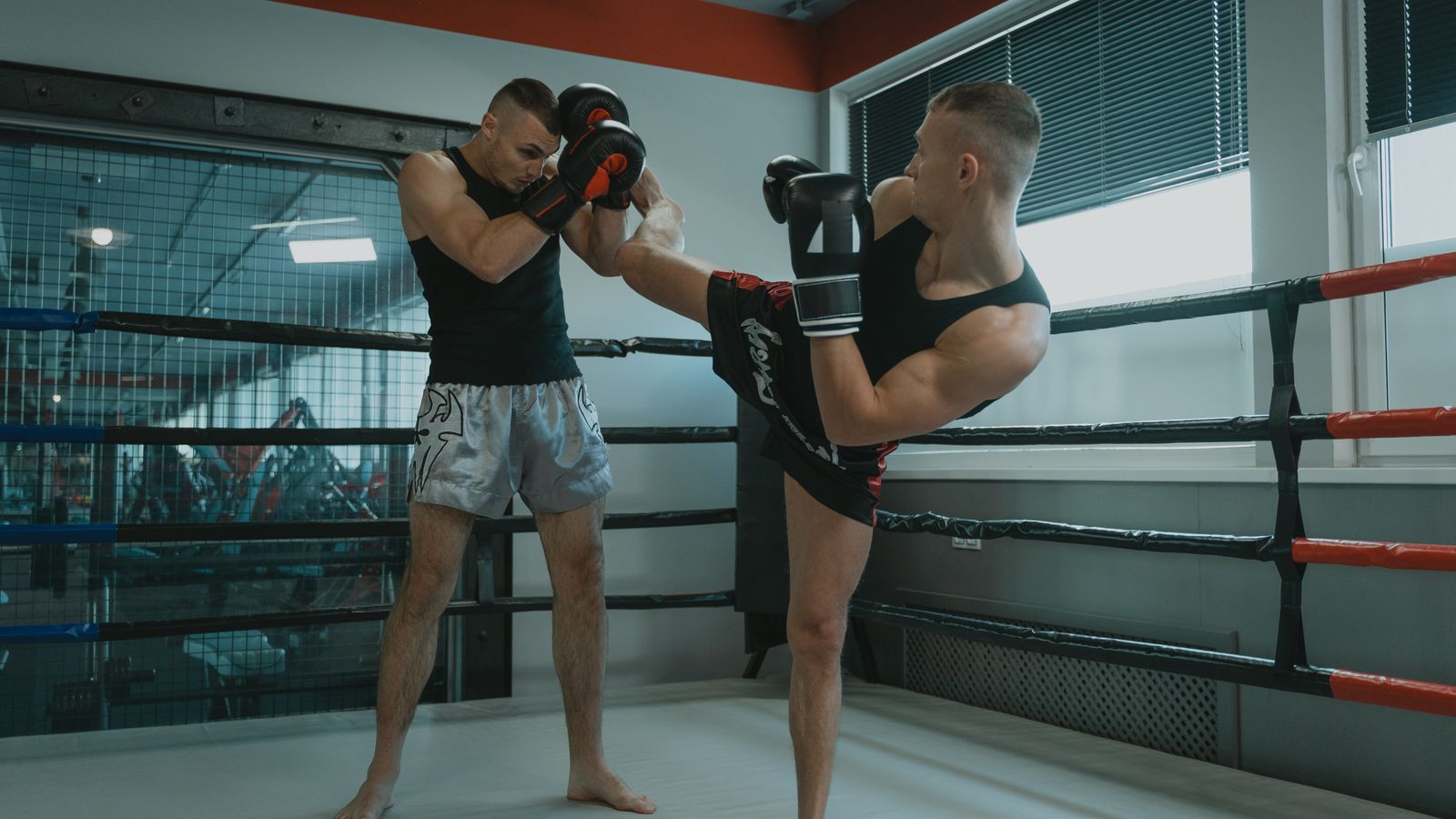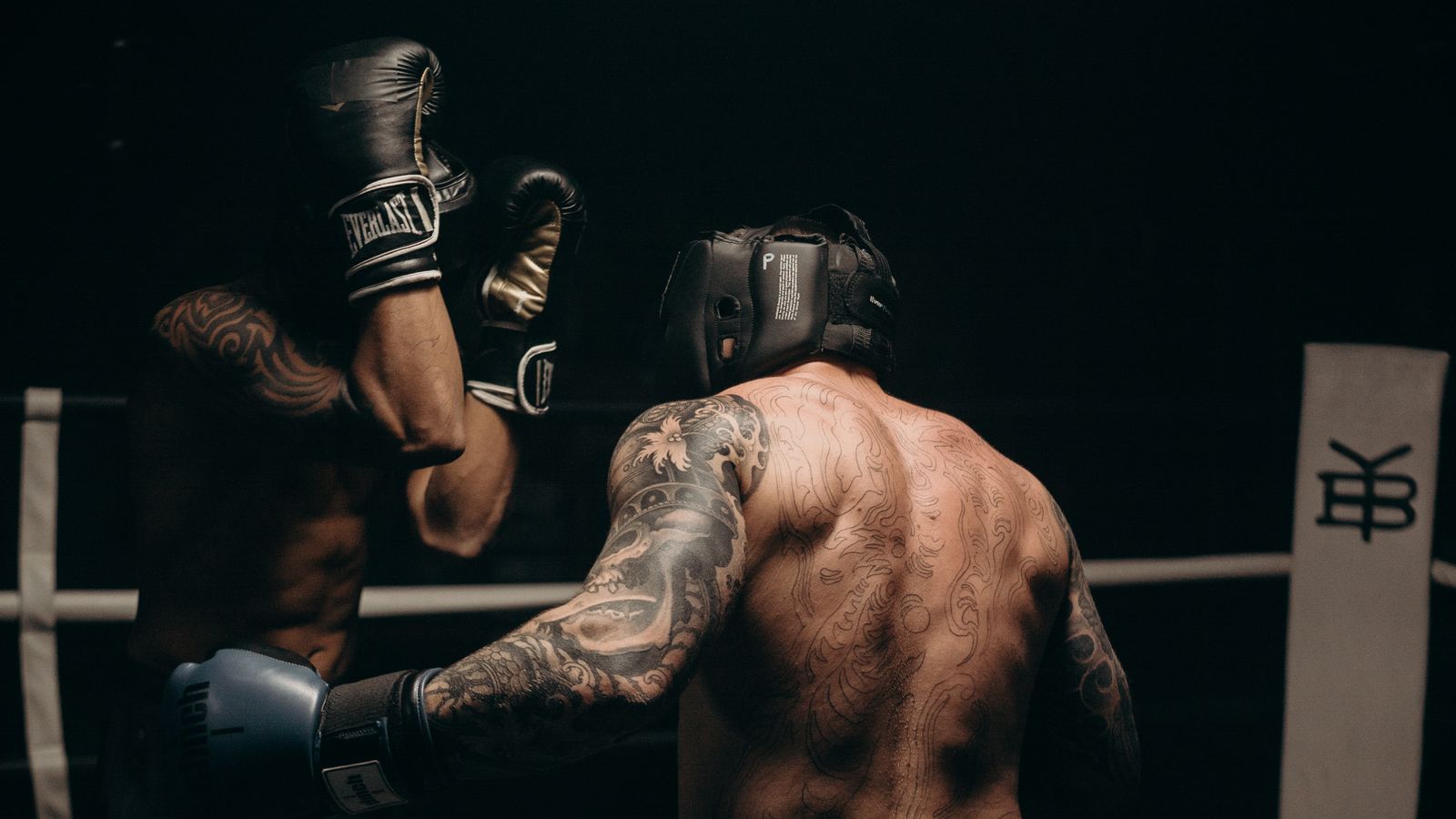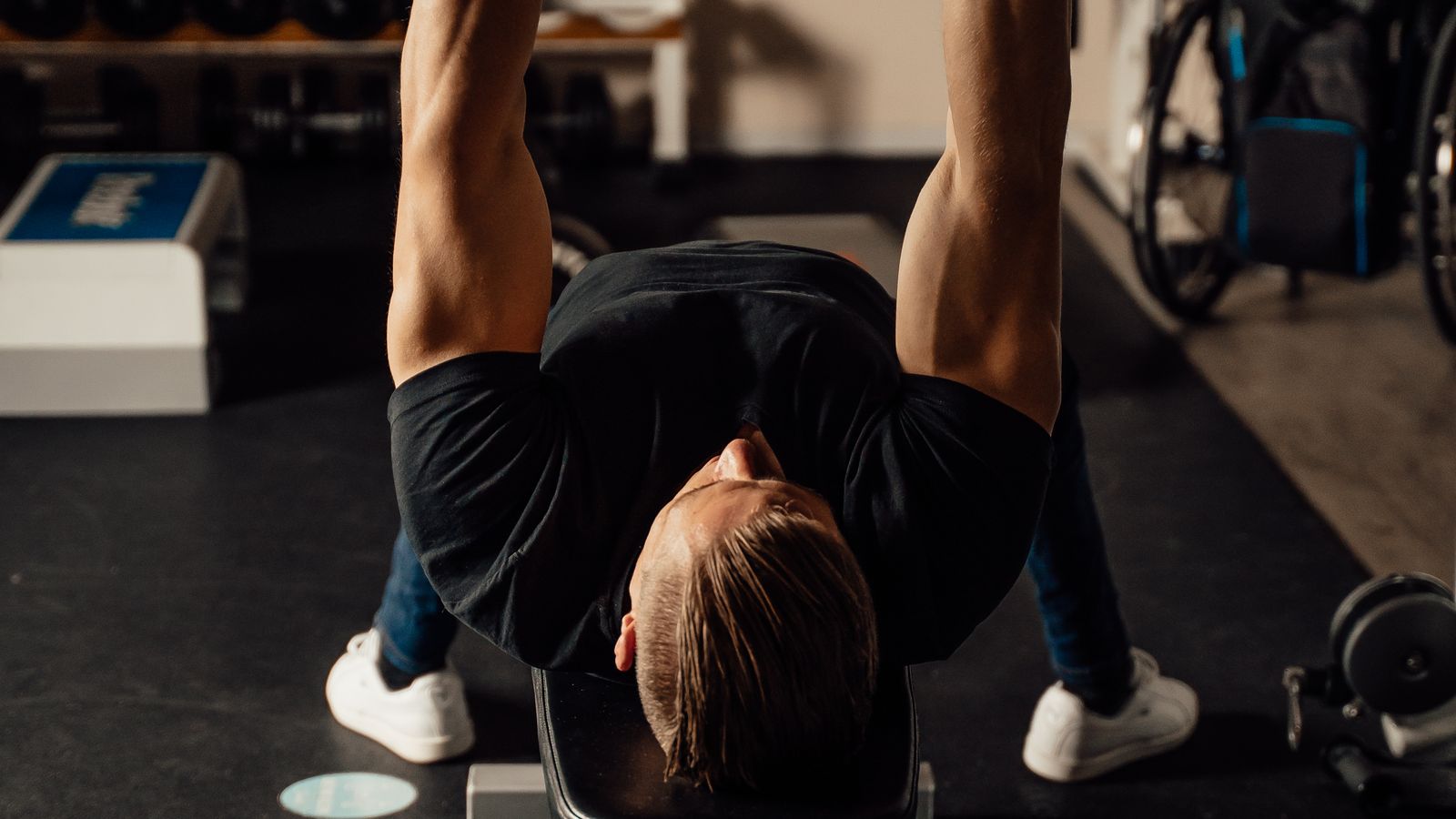
Good strength and conditioning for Muay Thai is full-body, built around power and rotation, and sequenced so you build a movement base before you chase heavy numbers. It is not a bodybuilding split with a heavy bag bolted onto the end of it, and for most hobbyists training a few times a week, it is not even necessary yet. That last part surprises people, so we will get to it.
Why a bodybuilding split does not work for fighters
Leg day, chest day, back day, shoulder day. It is the default template in every commercial gym in Singapore, and it is the wrong model for anyone training Muay Thai.
The problem is simple. Fighting does not use one muscle group at a time. A teep uses your hip, core, and shoulders together. A cross uses your legs, hips, and lats in one chain. When you train body parts in isolation on separate days, you build muscles that are strong on their own but never learn to fire together the way they need to in a fight.
Full-body or upper/lower conjugate-style training is what actually carries over. You hit strength, power, and conditioning qualities across the week instead of stacking all your leg strength into one session and leaving your legs too sore to kick properly two days later. Most decent Muay Thai gyms in Singapore that run S&C alongside class training already structure it this way, even if nobody calls it "conjugate" out loud.
What order should you train strength, power, and speed?
This is the mistake we see most often, more than any exercise selection problem: people train qualities in the wrong order, or try to train all of them in the same session.
The sequence that works is movement quality first, then strength, then power, then speed. You cannot build real power on a hip that does not move well, and you cannot build fight-speed output on a base that has no strength under it. Skipping steps to get to the fun part (throwing kettlebells, jumping onto boxes) just means you are expressing power through a compensation pattern instead of a clean one.
The other sequencing mistake is scheduling. Heavy lifting on the same day as a hard technical session or sparring is a common way to blunt both. Your nervous system and your legs do not fully separate "gym fatigue" from "pad fatigue." If you lift heavy in the morning and try to spar sharp in the evening, you are usually sparring on dead legs and calling it a bad day. Separate them, or at minimum, put the heavy strength work on a day with lighter technical work.
Does strength even matter more than power for fighters?
Not as much as people think. What matters is power, and power is force multiplied by velocity, not force alone.
This is why a 140 lb fighter with a fast jab can put down a 250 lb lifter with a slow push. The lifter has more raw force. The fighter has more force delivered per second. Rate of force development, how quickly you can express strength, matters more for a fighter than a one-rep max on the bench.
This does not mean strength training is pointless. It means the goal of the strength work is to raise the ceiling that your power output sits underneath, not to become a slow, heavy mover. Training at Khao Noi Gym, we see this most clearly in members who lift for size without ever training the fast end of the force curve. They get bigger and, if anything, slightly slower in the ring.
Grip and forearm endurance nobody trains
Clinch is where this shows up first. Fighters who never train grip or forearm endurance directly gas out in the clinch long before their legs or lungs give out. It is one of the most overlooked performance limiters in Muay Thai, because nothing in a standard gym program targets it.
Useful, low-equipment ways to build it:
- Fat-grip bar holds, timed
- Dead hangs from a pull-up bar
- Plate pinch carries, walking the length of a room and back
- Towel or gi pull-ups, which train grip and pulling strength together
Why rotational training matters more than most gym programs assume
Walk into most commercial gyms and the programming is almost entirely front-to-back movement: squat, bench, deadlift, row. All sagittal plane. Striking and pivoting are not. A roundhouse kick, a pivoting elbow, a check against an incoming kick, these all happen across multiple planes at once, and if your only strength training happens in one plane, you are building strength your sport does not use.
Rotational and anti-rotation work fills that gap:
- Pallof presses for anti-rotation core strength
- Landmine rotations for loaded, controlled hip and torso rotation
- Cable chops for the diagonal pattern a kick or cross actually uses
- Turkish get-ups for full-body coordination through multiple planes
Is your conditioning actually built in the right order?
There is a cardio sequencing mistake that is just as common as the strength one. Fighters and hobbyists jump straight into hard anaerobic conditioning, sprints, high-intensity circuits, before they have built any real aerobic base.
The aerobic system is what lets you recover between exchanges and stay sharp in the last round. If you skip building it and go straight to lactic, "burn it all out" conditioning, you get someone who looks fit in a five-minute circuit and completely falls apart by round three of an actual fight or a hard sparring session. Base first, intensity second. It is not exciting advice, but it is the one that holds up when it matters.
Do you actually need a dedicated S&C program?
Here is the honest part. If you are training two to three Muay Thai classes a week as a hobbyist in Singapore, you probably do not need a separate strength and conditioning program on top of it. Class volume alone, the pad rounds, the bag work, the drilling, builds plenty of conditioning in your first year or so of training. Bolting on extra gym sessions at that stage is more likely to add fatigue than fitness.
S&C starts to matter once you are training four or more times a week, once you have a fight coming up, or once you have genuinely plateaued and class training alone is not moving the needle anymore. At that point, targeted strength and power work fills real gaps. Before that point, it is often just extra volume competing with your recovery.
Why Singapore's climate changes the answer
Almost everything written about S&C for fighters comes from a US or UK strength-coach perspective, built for people training in a temperate climate with a full recovery budget. That advice does not transfer cleanly to Singapore.
Heat and humidity here are a real tax on recovery capacity. A program written for someone training in a cool gym in London, doing four Muay Thai sessions plus three lifting sessions a week, will bury someone doing the same volume in Singapore's humidity. The training itself does not change, but how much of it you can actually absorb does. This is one of the more common reasons members at Khao Noi Gym who try to copy a program off the internet end up flat and undertrained, not overtrained, because they quietly stopped recovering weeks before they noticed.
If you are adding S&C on top of Muay Thai training in Singapore, plan for less total volume than a program written for a cooler climate, and pay closer attention to sleep and hydration than the program itself tells you to.
Start with a trial class
If you are not sure whether you are at the stage where dedicated strength and conditioning actually helps you, the simplest way to find out is to build a real base in class first. Book a trial class at Khao Noi Gym in Singapore, see how your body responds to a few weeks of consistent training, and worry about programming on top of it once class volume alone stops being enough.