Your first amateur Muay Thai fight will feel harder than every sparring session you have ever done, even against people who hit softer than your training partners. That is not a sign you are unprepared. It is adrenaline, and it happens to almost everyone who steps into a ring for the first time, including people who have trained for years at Khao Noi Gym in Singapore before finally signing up.
This post is for adults who are already curious about fighting, not people wondering if they should be. If you are just training for fitness, skill, and the community at the gym, that is a completely legitimate reason to train and you do not need to read further. This is for the smaller group who keep thinking about it and want to know what it is actually like.
What does it actually feel like to fight for the first time
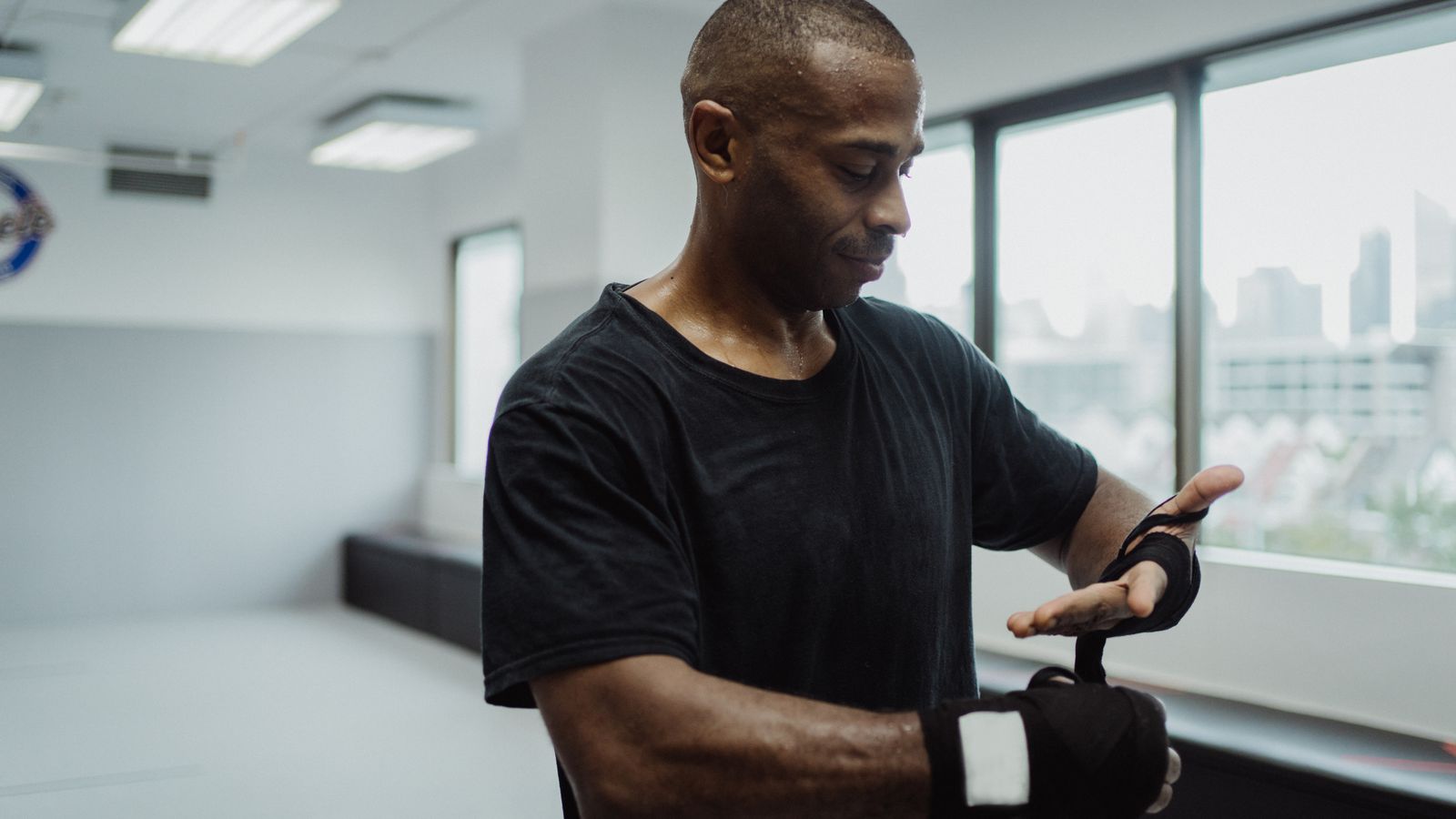
Nerves. Real, physical nerves, not the "I'm a bit anxious" kind. Most first-time fighters describe shaking hands during hand wraps in the dressing room, sometimes badly enough that a coach or teammate has to help finish the wrap. That is not weakness. It is cortisol and adrenaline flooding your system hours before you have thrown a single strike.
Then the fight starts, and within the first ten to twenty seconds, a lot of first-timers feel like they are already gassing out. This confuses people because they know their cardio is good. They have done the rounds on pads, they have sparred hard, they know what being tired feels like. This is different. It is your body burning through glycogen at a much faster rate than normal because of the adrenaline dump, not because your fitness has failed you.
Why does the adrenaline hit so much harder than sparring
Sparring at Khao Noi Gym, even hard sparring, happens inside a room you know, against people you train with every week, with no crowd, no scorecards, and no stranger trying to knock your head off. Your nervous system treats it as training. A fight is scored, public, and against someone whose intentions you genuinely do not know yet. Your body reads that as a real threat, and it responds the way it is built to respond to threats: heart rate spikes, breathing gets shallow and fast, and your muscles get flooded with fuel for a fight-or-flight response that has nothing to do with your actual Muay Thai skill.
The practical result is that a fighter with excellent conditioning can still feel like they are drowning for the first thirty to sixty seconds of round one. This is one of the most common things coaches hear after a debut fight: "I don't understand why I felt so gassed, my cardio is fine at the gym." It is fine. The adrenaline dump is just a different animal, and knowing that in advance changes how you handle it.
How do you manage the adrenaline dump
You cannot skip it. Nobody fights their first fight completely calm. But you can stop it from wrecking your fight.
- Expect it. If you know the gassed feeling is coming in round one, it does not panic you when it arrives. Fighters who expect it breathe through it. Fighters who do not expect it think something has gone wrong and start fighting scared.
- Control your breathing before you walk out. Slow, deliberate breaths in the dressing room and in the corner do more to settle your nervous system than anything else you can do in the final minutes.
- Trust the work you already did. The technique is already in your body from months of training at the gym. You do not need to think your way through combinations in the ring. Let your training take over instead of trying to consciously problem-solve mid-round.
- Let the first minute be rough. Most first-time fighters find their rhythm by the end of round one or start of round two, once the initial adrenaline spike settles. Fighting through that rough patch instead of folding under it is most of what a first fight teaches you.
Is fight week training different from a normal week
Yes, and this catches people off guard if nobody has explained it. In the days right before a fight, training volume and intensity go down, not up. This is called a taper, and the point of it is to walk into fight night fresh and recovered rather than tired from your own gym sessions.
A normal training week is about building. Fight week is about arriving in the best possible condition on one specific day. That means fewer hard sparring rounds, lighter pad work focused on sharpness rather than volume, and more recovery. It feels almost too easy compared to a regular week, and that is intentional. Fighters who ignore the taper and train hard right up to fight day are often the ones who feel flat and heavy-legged in the ring, not because they lack skill but because their body never got to recover.
Nutrition shifts too. On a normal training day you eat for general performance and recovery. In the days approaching a fight, more attention goes to carbohydrate intake to keep glycogen stores topped up, and to hydration, since a dehydrated fighter tires faster regardless of how fit they are. None of this needs to be complicated or extreme for an amateur debut. It mostly means eating enough, eating real food, and not showing up under-fuelled or dehydrated because you were nervous and forgot to eat properly.
How do you know if you are actually ready to fight
This is the question most people sit with quietly for months before they ever say it out loud to a coach. Nobody wants to ask "am I ready" and be told no, so a lot of people just keep training and wondering.
Here is what a coach is generally looking for before recommending someone for a first amateur fight:
- Consistent training history. Someone who shows up regularly over a sustained period, not someone who trains in bursts and disappears for weeks at a time.
- Technical readiness. Basic technique is sound enough that it holds up under pressure, not just when drilling slowly with no resistance.
- Comfort in sparring. This is the big one. Someone who can spar at increasing intensity without freezing up, panicking, or needing to be talked down every round is showing the composure a fight requires.
If you are genuinely unsure where you stand, the honest move is to say so directly to a coach rather than guessing. That conversation costs nothing and it is a normal one to have.
What does fight team preparation typically look like at Khao Noi Gym
At Khao Noi Gym, fight team preparation for a first amateur fight typically layers up over the weeks leading into the fight rather than starting from scratch right before it.
- Technical sharpening. Once a fight is confirmed, training starts leaning into whatever the ruleset and matchup call for, refining the tools most likely to matter on the night rather than working everything evenly.
- Sparring that escalates gradually. Rounds get progressively more realistic and higher intensity as fight day approaches, so the fighter is not experiencing genuine pressure for the first time in the ring itself.
- The taper. In the final stretch, volume and intensity come down deliberately so the fighter walks in fresh rather than worn down from their own preparation.
Do you need to fight to get value out of Muay Thai
No, and this is worth saying plainly. Most people training Muay Thai in Singapore, including most people at Khao Noi Gym, never fight and never intend to. They train for fitness, for stress relief, for the skill itself, and for the community that builds around a gym you show up to a few times a week. That is a complete and valid reason to train, full stop.
Fighting is a specific extra step for people who are curious about testing themselves in that particular way. It is not the "real" version of training and everything else is not a lesser version. If competing does not interest you, nothing about your training is incomplete.
What happens after your first fight
Whatever the result, most first-time fighters describe the same thing afterward: relief, a strange mix of exhaustion and clarity, and usually an immediate sense of what they would do differently next time. Win or lose, stepping into the ring and getting through it tends to change how people carry themselves in training afterward. Sparring that used to feel intense at the gym often feels calmer once you have been through an actual fight.
Curious about the Fight Team
If any of this has been sitting in the back of your mind for a while, the simplest next step is just a conversation. Have a chat with one of the coaches at Khao Noi Gym about where your training is at and what fight team preparation would look like for you specifically. There is no pressure either way. Some people talk it through and decide to keep training purely for themselves, and that is a fine outcome too. Others find that conversation is exactly what turns "maybe someday" into an actual date on the calendar.